Kate Kim

Tom Holland’s non-alcoholic beer brand printed its Spider-Man tie-in can upside down, so the wall-crawler appears to dangle off the top of the label instead of standing on it. It’s a small design choice, sure, but it’s also the whole argument for why the campaign worked: the joke only exists because Holland actually plays Spider-Man, and the brand only exists because it’s an extension of who he is.
Three other campaigns from the past year did a version of the same thing. Kim Kardashian turned the actual criticism levelled at her into the creative for an energy drink launch. Gap became the canvas for Malcolm Todd and Inde Navarrette as they interpreted what denim mean to them and Charli XCX demonstrated 135 hours of battery life by sitting in one room for five days, which is a reasonable ask when you hold equity in the company.
Different categories, with different mechanics, but the same underlying move: each campaign is anchored to something specific and real that only that person or that product could actually claim thanks to their brand persona.
Bero, the non-alcoholic beer brand Holland founded after two years of sobriety, released a limited-edition Kingston Golden Pils tied to Spider-Man: Brand New Day that released recently in July 2026. The upside-down can label is the whole idea: Spider-Man dangling from the top, tagline “Your Friendly Neighborhood Non-Alcoholic Beer.” To top it off, there’s a little nod to Bero as the product appears briefly in the movie, where Peter Parker is seen entering a bodega that sells the non-alcoholic beer, strengthening that connection between Spiderman and Holland’s brand.
The campaign connected 3 things audiences already associated with Holland, 1) Spider-Man 2) his public decision to stop drinking 3) non-alcoholic brand that grew from that experience.
Bero used a genuine part of his story to make the product and partnership feel credible, memorable, and uniquely his.Nobody had to invent a reason for Spider-Man to care about a non-alcoholic beer when the founder is literally Spider-Man.
Kardashian is co-founder of UPDATE, a caffeine-free energy, which relaunched with her as co-founder in early 2026. The launch ad stages a mock White House press conference crossed with a contemporary art installation: Kardashian addresses a room of reporters, then appears inside a transparent glass box on a pedestal, working on a laptop while the room watches.
The whole thing satirises the tabloid coverage and internet criticism that’s followed her for over a decade, under the line “I didn’t pass the bar, I raised it.”, which is referring to when the internet heavily criticized her for failing the bar exam.
Why it works: UPDATE publicly brought to light conversation audiences were already having about Kim instead of trying to manufacture a new one. By turning criticism about her legal ambitions into a self-aware joke, the campaign gave audiences the satisfaction of recognizing the reference and being in on it. That cultural familiarity made the creative more likely to prompt likeability than sharing a conventional product announcement using her name.
For its Fall 2026 “Denim on Your Own” campaign, Gap brought together musician Malcolm Todd and actress Inde Navarrette – two emerging talents with distinct creative identities. Rather than asking them to simply model the collection, Gap gave them the creative direction to interpret the material in their own style and built the campaign around their personas instead.
Todd recorded an original rendition of Robyn’s “Dancing on My Own,” reshaping the recognizable anthem through his own musical style. Navarrette, following her breakout performance in Obsession, brought an equally individual presence to the campaign as the risingIndie-movie star. Against a white background, the two use clothing, music, and movement to express their personalities, positioning Gap denim as a canvas rather than a prescribed look.
Why it works: Every part of the execution reinforces the same idea. Todd makes a familiar song his own while Navarrette brings her own energy and style built around the character that she gave life to. Instead of casting random two rising celebrities, they selected talent whose creative identities could demonstrate the product proposition.The product invites customers to wear denim on their own terms.
In May 2026, Charli XCX became Nothing’s first global brand ambassador, and she’s also a shareholder in the London tech brand, joining other investors including The Weeknd, Swedish House Mafia and Casey Neistat. This isn’t a lo-fi music tie-in; the campaign, shot by her long time collaborator Aidan Zamiri, films her in a single room across five days to demonstrate the Nothing Headphone (a)’s 135-hour battery life with ANC off, a real spec on a product that launched in March 2026.
“When I’m creating, I’m always thinking about how my work will be experienced,” she said of the concept. A five-day shoot in one room is an unusual creative brief for a music artist. It reads as ordinary once you know the brief was a battery spec, not a song.
Why it works: The campaign turned an abstract technical claim into visible proof. Instead of simply telling audiences the headphones offer a long battery life, Nothing built the entire creative format around demonstrating it through Charli XCX. Her distinctive aesthetic and commitment to creating music over the five days. made the collaboration feel invested rather than transactional.
These campaigns work because the celebrity connection is specific and authentic enough that another famous face couldn’t simply be substituted into the same idea. Holland’s sobriety and relationship with Spider-Man make the upside-down non-alcoholic beer be more than a licensing gag. Kardashian’s actual public narrative makes the glass-box ad funny instead of defensive. Malcolm Todd’s reinterpretation of “Dancing on MyOwn” and Inde Navarrette’s individual style turn Gap’s “Denim on Your Own”message into something the talent actively demonstrates. Charli’s XCX’s equity stake makes a five-day battery-life video feel like genuine commitment rather than a paycheque.
The nature of the connection differs across the four campaigns. Some are rooted in ownership, others in personal history or creative participation. What they share is a reason for that specific person to be there.
Admiring these campaigns is easy. Reporting on them is where it gets difficult, because standard benchmarks can show that something generated attention without explaining what made people respond.
Gap’s campaign, for example, is simultaneously a denim advertisement, a celebrity collaboration, a music reinterpretation and a statement about individual style. Overall engagement cannot reveal whether audiences responded most strongly to Malcolm Todd, Inde Navarrette, the Robyn track, the styling or the “Denim on Your Own” message. A five-days-in-a-room battery demonstration could be categorized as entertainment, an artist collaboration or a product demo, producing very different performance expectations depending on which benchmark is used.Kardashian’s self-satirising campaign creates a similar challenge: a sentiment tool may interpret criticism and bar-exam references as negativity, even when audiences are positively engaging with the joke.
Judging these campaigns only against category averages or against a brand’s own content from six months earlier risks missing the actual result. None fits neatly into a single conventional content category.
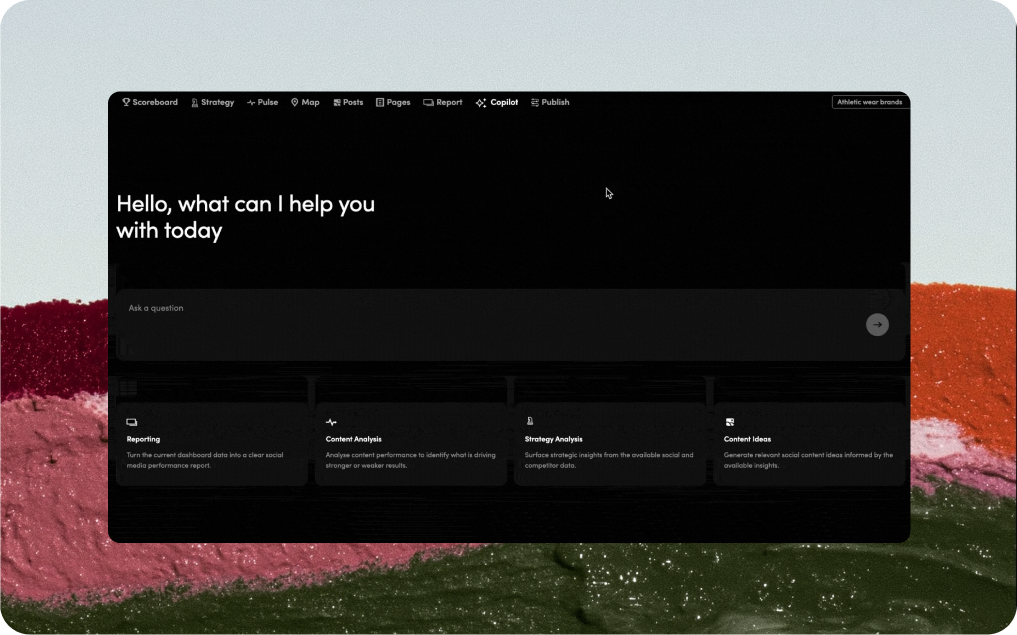
That is why measurement needs to go beyond reporting reach and engagement. Brands need to identify the creative variables within a campaign; understand which themes audiences are responding to and compare performance with brands running genuinely similar ideas. For Gap, that could mean comparing the campaign with other music-led fashion collaborations rather than every piece of denim content in the category. For Nothing, it could mean comparing the work with other entertainment-led product demonstrations rather than a typical headphone advertisement.
A generic benchmark can tell you how typical content performs but a more specific analysis tells you why an unconventional campaign is working and which elements are worth carrying into the next one.
You don’t need a celebrity budget to apply the underlying lesson. Start with something specific and true about your brand, product or audience, then build the campaign around the person or creative format best equipped to express it.
If you are working with talent, ask why that particular person needs to be part of the idea. Are they contributing a real story, recognizable perspective, creative skill or meaningful stake in the outcome? Could the same script be handed to any other well-known person without changing the campaign? If so, the partnership is probably based on borrowed reach rather than genuine relevance.
Gap didn’t simply place Malcolm Todd in a pair of jeans. It asked him to reinterpret a familiar song, mirroring how customers make familiar denim their own. That alignment between talent, execution and product is what other brands can reproduce, even without a famous face.
Reporting expectations should also be established before the campaign launches. Define what you believe will make the idea resonate, identify the comparable campaigns you will benchmark it against and determine which audience signals will validate your hypothesis. If the campaign combines celebrity, music, humour or product demonstration, track those elements separately wherever possible.
The objective is not simply to determine whether the campaign performed. It is to understand why so the insight can inform what your brand does next.


.avif)